
Moroccan cuisine is one of the most aromatic, colorful, and culturally rich culinary traditions in the world and at the heart of it stands the Moroccan Tajine, the slow-cooked masterpiece known for deep flavors, tender textures, and soul-warming spices.
More than just a dish, the tajine is a symbol of Moroccan hospitality, Amazigh heritage, and the art of patient, careful cooking.
In this guide, you’ll learn everything from the origins of the tajine to the full recipe, cooking secrets, regional variations, and serving ideas.
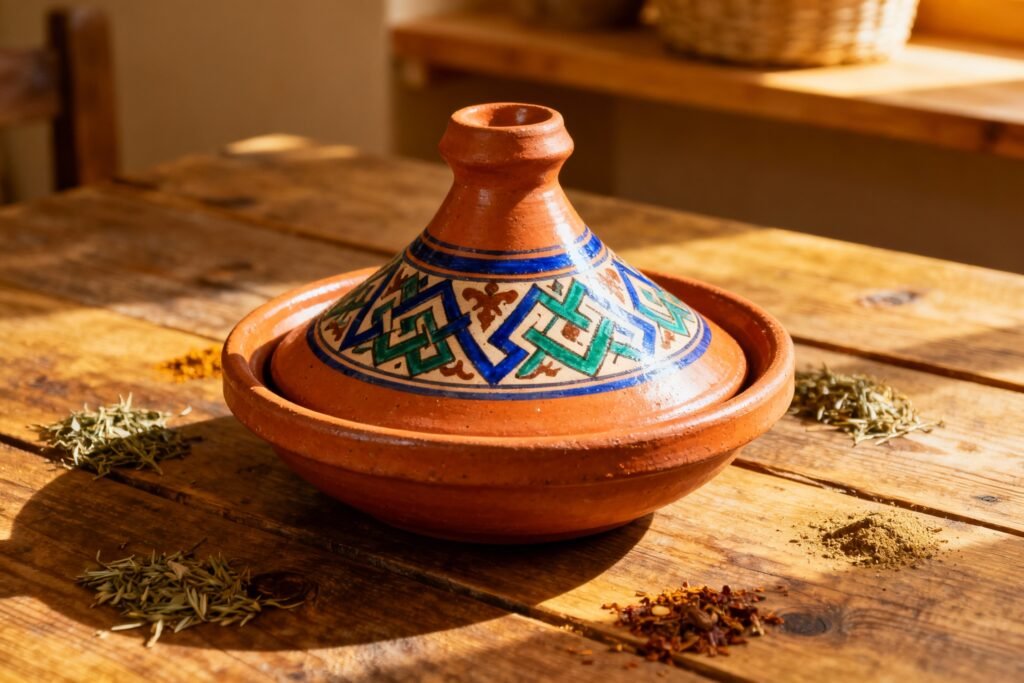
1. A Brief History: Tajine and Amazigh Roots
The word tajine refers both to the clay pot and the dish cooked inside it.
Its origin goes back thousands of years to the Amazigh (Berber) people of North Africa, who perfected slow cooking in clay over low heat.
Why the Tajine Pot Works So Well
- The cone-shaped lid traps steam
- Moisture condenses and falls back into the food
- Flavors intensify without burning
- Meat becomes incredibly tender
- Very little water is needed
Each Moroccan region adds its own touch:
- Marrakech: strong spices, preserved lemon
- Fes: refined flavors, caramelized onions
- Souss: argan oil & vegetables
- Sahara: spicier and heavier in cumin
2. Ingredients: Authentic Moroccan Tajine
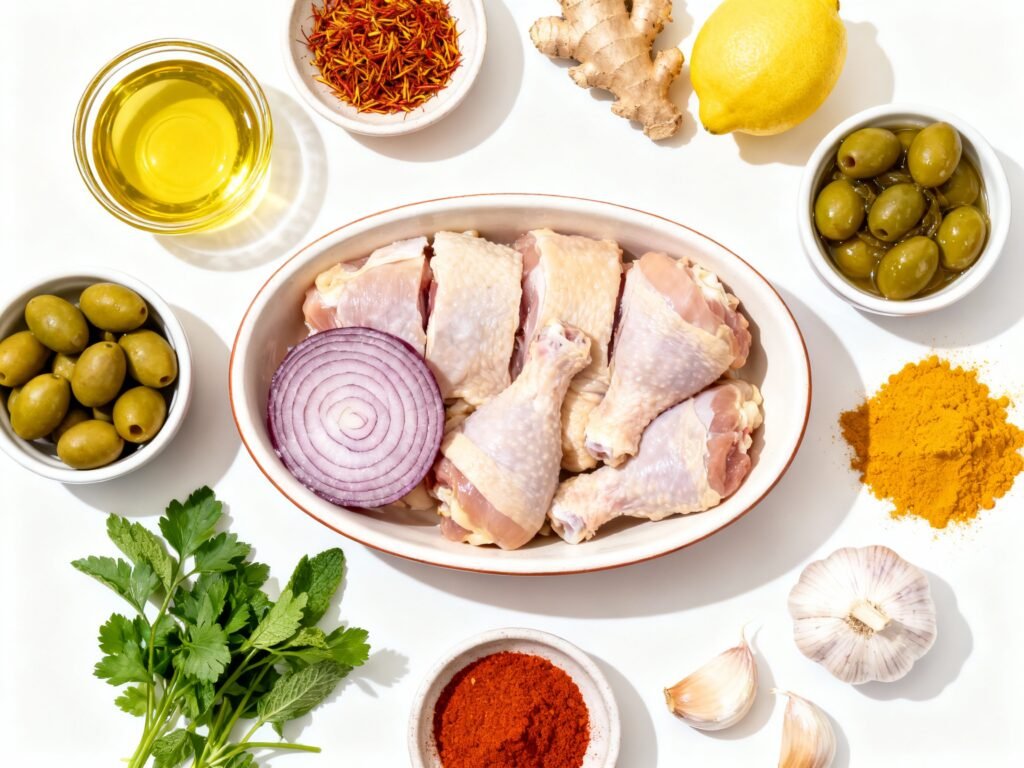
This recipe follows the traditional Chicken Tajine with Preserved Lemon and Olives.
🥘 Main Ingredients
- 1 whole chicken (cut into 4 pieces) or 800g chicken thighs
- 2 large onions (finely sliced)
- 3–4 garlic cloves (crushed)
- 1 preserved lemon (cut into 4 pieces)
- 150g Moroccan green olives
- 3 tbsp extra-virgin Moroccan olive oil
- Fresh parsley + coriander (1 handful each, chopped)
🌶 Spices (very important!)
- 1 tsp turmeric
- 1 tsp ginger powder
- ½ tsp black pepper
- 1 tsp sweet paprika
- A pinch of saffron threads (or saffron powder)
- ½ tsp cumin (optional)
- Salt to taste
- Small piece of cinnamon stick (optional)
💧 Liquid
- 80–100 ml water (NO more!)
- Optional: 1 tbsp of preserved lemon brine
🥔 Optional Vegetables
- Potatoes
- Carrots
- Zucchini
- Peas
3. Step-by-Step: How to Cook a Perfect Tajine
🔥 Step 1: Prepare the Tajine Pot
If using a clay tajine for the first time:
- Soak in water for at least 2 hours
- Dry completely
- Rub interior with olive oil before cooking
Always cook on very low heat (key to avoid cracks).
🍗 Step 2: Build the Flavor Base
Place onions as the first layer (protects the pot).
Add chicken on top.
Add garlic, herbs, spices, and olive oil.
Mix gently by hand to coat everything.
🥔 Step 3: Add Vegetables
Place vegetables around and on top to create a dome shape.
Add preserved lemon slices and olives on the sides.
💧 Step 4: Add Water Carefully
Pour only 80–100 ml of water near the edge, not directly on top.
Tajine is steam-based cooking—too much water ruins the flavor.
⏳ Step 5: Slow Cook
- Cover tightly
- Cook 1h 30 min on low heat
- Occasionally rotate the pot slightly to distribute heat
- Add a little water if it becomes too dry (rarely needed)
🍛 Step 6: Caramelization (The Secret Step)
In the last 15 minutes:
- Open the lid slightly
- Let onions reduce
- Olive oil + onions + spices become golden and thick
This creates the deep Moroccan flavor you taste in restaurants.
✔️ Step 7: Check Doneness
Your tajine is perfectly cooked when:
- Chicken is very tender
- Sauce is thick and glossy
- Onions are soft and golden
- No watery broth
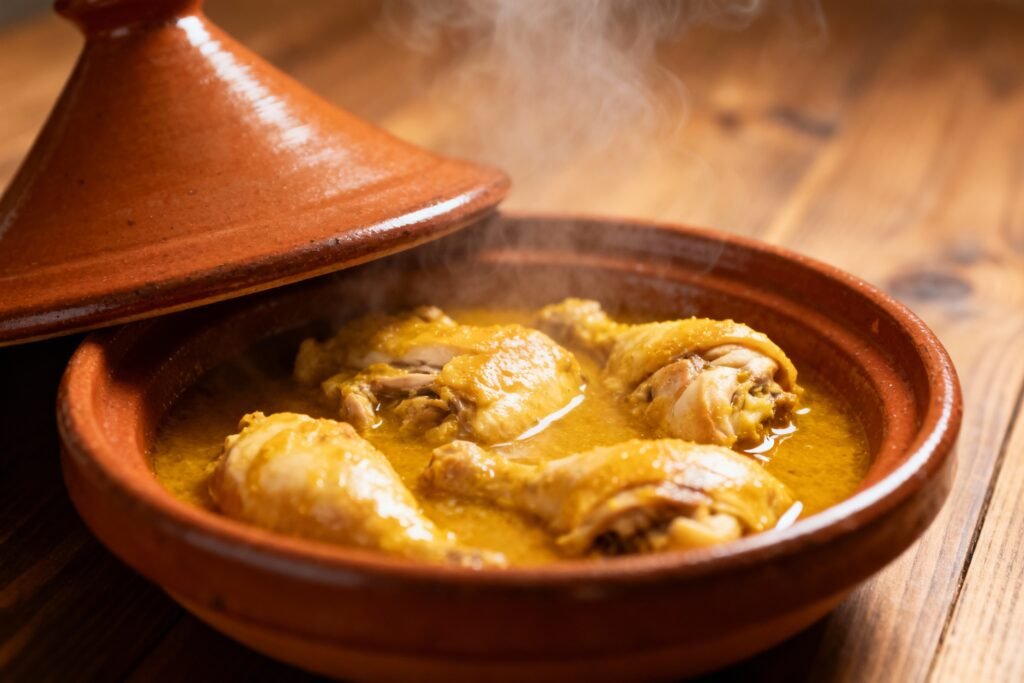
4. Cooking Science & Secrets
⭐ Steam Circulation
The cone traps steam → condenses → returns to food
= Moist, tender, flavorful.
⭐ Low and Slow
Moroccans never rush tajine.
Low heat = no burning + full flavor extraction.
⭐ Preserved Lemon Magic
Adds:
- acidity
- fragrance
- salt
- complexity
⭐ Olives Bring Savory Depth
Especially Moroccan green “meslalla” olives.
⭐ Spice Balance
Moroccan tajine is not spicy.
It’s:
- warming
- aromatic
- balanced
5. Famous Moroccan Tajine Variations
🍗 Chicken with Preserved Lemon & Olives (classic)
Bright, tangy, aromatic.
🥩 Beef with Prunes & Almonds
Sweeter profile with cinnamon and honey.
🐑 Lamb with Apricots
Perfect for celebrations.
🐟 Fish Tajine with Chermoula
Uses cilantro, coriander, paprika, cumin, lemon, olive oil.
🥕 Vegetarian Tajine
Zucchini, carrots, peas, potatoes, chickpeas.
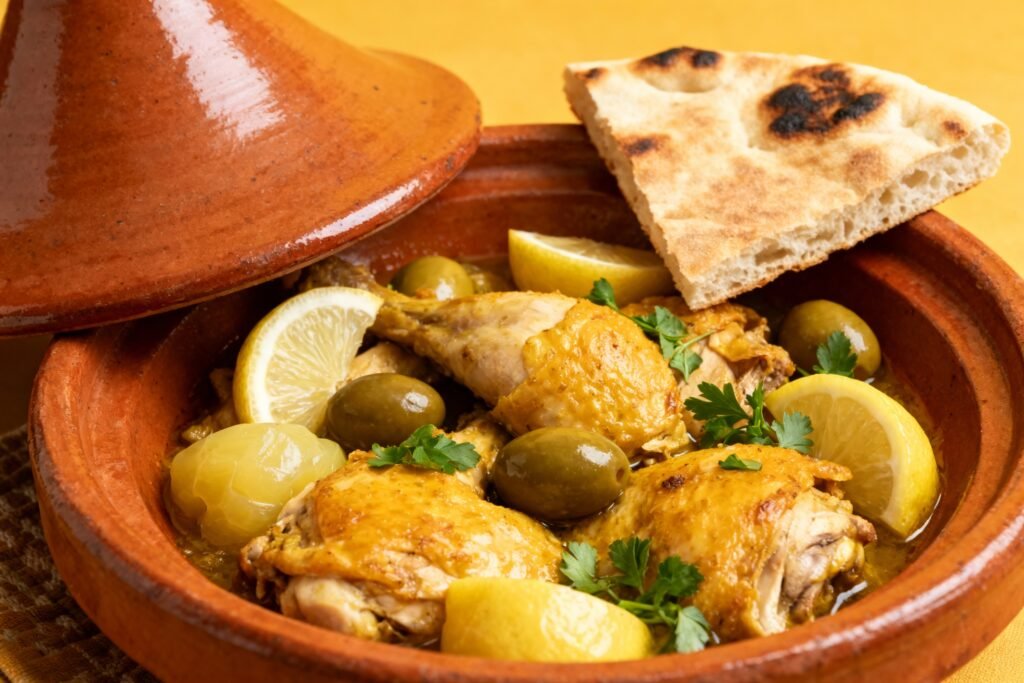
6. How Moroccans Serve Tajine
Traditionally:
- Served in the tajine itself, hot and sizzling
- Eaten with Moroccan bread (khobz)
- Shared from one dish
- Enjoyed with mint tea or Moroccan salads
Bread is used to scoop the sauce—no knives needed.
7. Conclusion
The Moroccan tajine is more than a meal—it is culture, tradition, patience, and love all served together in one clay pot.
Whether you prepare it with chicken, fish, lamb, or vegetables, the technique remains the same: slow heat, rich spices, and careful layering.
Try it at home, enjoy the aromas, and bring a piece of Morocco to your kitchen.
